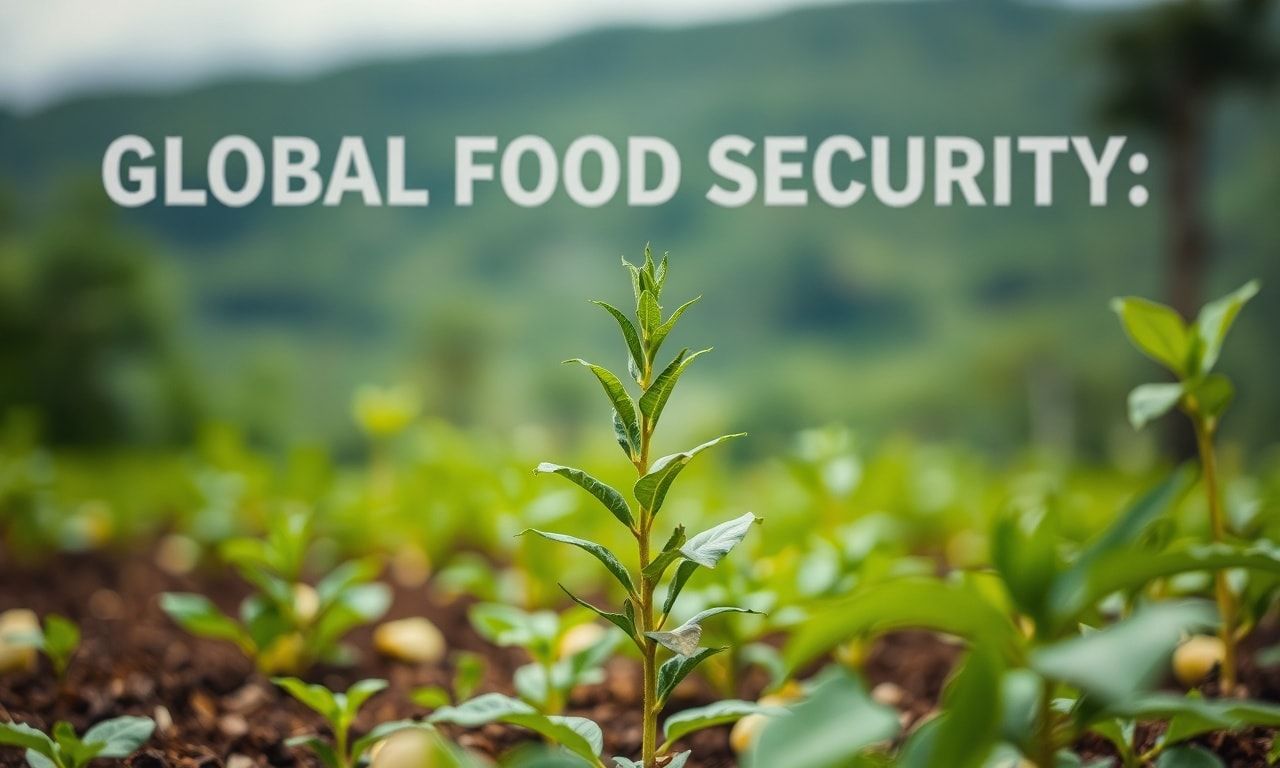
The Growing Challenge of Food Security
The world is facing an unprecedented challenge in ensuring global food security. With a rapidly growing population, the United Nations estimates that food production will need to increase by 70% by 2050 to meet the demands of an estimated 9.7 billion people. This challenge is further exacerbated by the impacts of climate change, which are altering weather patterns, increasing the frequency of extreme weather events, and affecting the productivity of agricultural systems.
In recent years, the world has witnessed a series of climate-related disasters that have had significant impacts on food production. From droughts in sub-Saharan Africa to floods in South Asia, these events have highlighted the vulnerability of our food systems to climate change. According to the World Food Programme, more than 820 million people worldwide suffer from chronic undernourishment, a number that is expected to rise as the impacts of climate change intensify.
The Role of Agricultural Innovation
In the face of these challenges, agricultural innovation is emerging as a key solution to ensuring global food security. Advances in technology, such as precision agriculture, genetic engineering, and vertical farming, are offering new ways to increase crop yields, improve resource efficiency, and enhance the resilience of agricultural systems to climate change.
Precision agriculture, for instance, uses data analytics and satellite imagery to optimize the use of inputs such as water, fertilizers, and pesticides, thereby increasing crop yields and reducing environmental impacts. Genetic engineering, on the other hand, is enabling the development of crops that are more resistant to pests, diseases, and extreme weather conditions. Vertical farming, which involves growing crops in stacked layers, often in controlled environments, is another innovative approach that can significantly increase food production while using less land and water.
The Impact of Climate Change on Agriculture
Climate change is having a profound impact on agriculture, with rising temperatures, changing precipitation patterns, and more frequent extreme weather events all affecting crop yields and livestock productivity. According to a report by the Intergovernmental Panel on Climate Change (IPCC), global warming of 1.5°C will have significant impacts on food security, particularly in tropical and subtropical regions.
In addition to these direct impacts, climate change is also affecting the availability and quality of water resources, which are essential for agriculture. Droughts, for example, can lead to water shortages, while floods can contaminate water sources and damage irrigation systems. These impacts are particularly severe in regions that are already water-stressed, such as the Middle East and North Africa.
Adaptation and Mitigation Strategies
To address these challenges, a combination of adaptation and mitigation strategies is needed. Adaptation strategies focus on increasing the resilience of agricultural systems to climate change, while mitigation strategies aim to reduce greenhouse gas emissions from agriculture and other sectors.
Adaptation strategies include the development and adoption of climate-smart crops, improved water management practices, and the use of weather forecasting and early warning systems to prepare for extreme weather events. Mitigation strategies, on the other hand, include reducing emissions from agricultural activities, such as livestock farming and rice cultivation, and promoting sustainable land use practices that enhance carbon sequestration.
For instance, China’s agriculture news and updates reports that the country is investing heavily in agricultural innovation and sustainable practices to address the impacts of climate change. These include the development of drought-resistant crops, the promotion of organic farming, and the implementation of water-saving irrigation systems. Similar efforts are being undertaken in other parts of the world, demonstrating the global recognition of the need for agricultural innovation to ensure food security in the face of climate change.
The Way Forward
Ensuring global food security in the face of climate change will require a concerted effort from governments, the private sector, and civil society. This includes investing in agricultural research and development, promoting the adoption of innovative technologies and practices, and strengthening international cooperation to address the challenges of climate change and food security.
Moreover, it is essential to recognize the role of smallholder farmers, who produce a significant portion of the world’s food but are often the most vulnerable to the impacts of climate change. Supporting these farmers through access to credit, markets, and technology can enhance their resilience and contribute to global food security.
In conclusion, the intersection of climate change and agricultural innovation presents both significant challenges and opportunities for ensuring global food security. By embracing innovation and adopting a holistic approach that combines adaptation and mitigation strategies, we can build a more resilient and sustainable food system that can meet the needs of a growing population in a changing climate.